
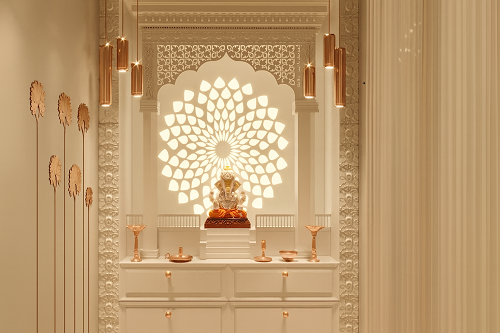
Discover the ideal mandir placement as per Vastu with simple tips to bring harmony and positive energy into your home, shared by expert interior designers in Bangalore.
A mandir, or home temple, is the most sacred and peaceful corner of an Indian home. It’s a space where divine energy flows, where prayers are offered, and where the mind finds calmness. According to Vastu Shastra, the ancient Indian science of architecture, the placement of a mandir plays a vital role in maintaining harmony, prosperity, and spiritual well-being. The right direction and design can attract positive energy, while the wrong placement can disturb the balance of the home.
This comprehensive guide explains the best directions to place your mandir according to Vastu, along with expert design tips from interior designers in Bangalore.
Understanding the Importance of Mandir Placement in Vastu Shastra:
Vastu Shastra is based on the balance of the five elements—earth, water, fire, air, and space. Each direction in a home is governed by a specific element and deity. The mandir, being a sacred space, should be placed in a direction that enhances spiritual energy and allows divine vibrations to flow freely.
When the mandir is placed correctly, it brings peace, prosperity, and happiness to the household. It also helps maintain mental clarity and emotional stability. On the other hand, incorrect placement can lead to stress, financial instability, or disharmony.
Best Directions to Place Your Mandir According to Vastu
1. Northeast Direction (Ishan Kona) – The Most Auspicious
The northeast corner is considered the most sacred direction for placing a mandir. It is believed to be the abode of the gods and the source of divine energy. This direction receives the first rays of the morning sun, symbolizing purity and enlightenment.
Vastu Tips:
Place the mandir in the northeast corner of the home or room.
The idols should face west or east, and the person praying should face east.
Keep the mandir area clean, bright, and clutter-free.
Avoid placing heavy furniture or storage above or around the mandir.
2. East Direction – The Direction of Rising Sun:
The east direction is associated with the rising sun and new beginnings. It brings positivity, growth, and vitality. If the northeast corner is unavailable, the east direction is the next best option.
Vastu Tips:
The person praying should face east for maximum spiritual benefit.
Use light colors like white, cream, or pastel shades for the mandir area.
Ensure the mandir receives natural light during the day.
3. North Direction – The Direction of Prosperity
The north direction is ruled by Lord Kuber, the god of wealth. Placing the mandir here can attract prosperity, abundance, and financial stability.
Vastu Tips:
Keep the mandir well-lit and decorated with fresh flowers.
Avoid placing the mandir near bathrooms or under staircases.
Use metallic or white tones to enhance the energy of this direction.
Directions to Avoid for Mandir Placement:
Certain directions are considered inauspicious for placing a mandir according to Vastu Shastra. These directions can block positive energy and create imbalance in the home.
South Direction: Associated with Yama, the god of death, this direction is not suitable for a mandir.
Southwest Direction: This direction can lead to conflicts and instability.
Under the Staircase: Placing a mandir here symbolizes suppression of divine energy.
Bedroom and kitchen: These areas are not ideal for worship due to their functional nature and lack of sanctity.
Ideal Mandir Design Tips from Interior Designers in Bangalore:
Professional interior designers in Bangalore, such as Urvi Interiors, emphasize that a mandir should be designed with both spirituality and aesthetics in mind. The design should reflect peace, simplicity, and devotion while blending seamlessly with the home’s interiors.
1. Choose the Right Material:
Wood and marble are the most preferred materials for mandirs. Wooden mandirs bring warmth and tradition, while marble mandirs exude purity and elegance. Teak, rosewood, and Sheesham are popular choices for wooden mandirs.
2. Maintain Proper Lighting:
Lighting plays a crucial role in creating a divine atmosphere. Soft, warm lighting enhances the spiritual ambiance. Diyas, candles, or LED lights can be used to create a serene glow. Avoid harsh or colored lights.
3. Keep the Mandir Elevated:
The mandir should be slightly elevated from the ground. This symbolizes respect and ensures that divine energy flows freely. A small wooden or marble platform can be used for elevation.
4. Use Calming Colors:
Colors like white, cream, light yellow, or pastel shades promote peace and positivity. Avoid dark or dull colors in the mandir area, as they can absorb energy instead of reflecting it.
5. Decorate with Simplicity:
Avoid overcrowding the mandir with too many idols or decorative items. Simplicity enhances focus and spiritual connection. A few fresh flowers, incense sticks, and a diya are enough to create a divine atmosphere.
Mandir Placement in Different Home Areas:
1. Living Room:
If space is limited, the living room can be a good place for a small mandir. Place it in the northeast corner and ensure it faces east or north. Use a small wooden cabinet or wall-mounted unit to save space.
2. Kitchen:
If the mandir must be in the kitchen, place it in the northeast corner and ensure it is higher than the cooking platform. Avoid placing it near the stove or sink.
3. Bedroom:
Avoid placing a mandir in the bedroom. If unavoidable, use a curtain to separate it from the sleeping area and ensure feet do not point toward the mandir.
4. Balcony or Terrace:
A small mandir can be placed in the northeast corner of a balcony or terrace, provided it is protected from direct sunlight and rain. Use a canopy or glass enclosure for protection.
5. Dedicated Pooja Room:
If space allows, a separate pooja room is ideal. The entrance should face east or north, and the idols should be placed in the northeast corner. Keep the room well-ventilated and filled with natural light.
Common Vastu Mistakes to Avoid:
Placing idols facing each other or the main door.
Keeping broken or damaged idols.
Storing unnecessary items in the mandir area.
Using dark or dull colors around the mandir.
Ignoring cleanliness and regular maintenance.
Placing the mandir near toilets or under beams.
Additional Vastu Tips for Mandir Placement:
Always light a diya in the morning and evening to maintain positive energy.
Use copper or brass utensils for offering water or prasad.
Keep the mandir door open during prayers and closed afterward.
Avoid keeping photographs of deceased ancestors in the mandir.
Use natural incense or camphor to purify the space.
How Urvi Interiors and Other Interior Designers in Bangalore Can Help:
Designing a mandir that aligns with Vastu principles requires both spiritual understanding and aesthetic sense. The top 10 interior design company in Bangalore, including Urvi Interiors, can help create a mandir that complements the home’s interiors while maintaining Vastu harmony. These professionals ensure the right placement, materials, lighting, and design elements to enhance both beauty and positivity.
Urvi Interiors specializes in creating customized mandir designs that blend traditional Vastu principles with modern aesthetics. Whether it’s a compact apartment or a spacious villa, their team ensures that every mandir is designed to radiate peace, positivity, and divine energy. From carved wooden temples to sleek marble units, Urvi Interiors offers designs that suit every style and budget.
Modern Mandir Design Ideas for Urban Homes:
Wall-Mounted Mandir Units: Ideal for small apartments, these save space while maintaining elegance.
Corner Mandirs: Utilize unused corners effectively with compact designs.
Glass-Enclosed Mandirs: Perfect for contemporary homes, offering a clean and minimal look.
Foldable Mandirs: Great for multifunctional spaces, allowing flexibility.
Carved Wooden Mandirs: Add a traditional touch with intricate craftsmanship.
LED-Backlit Mandirs: Combine modern lighting with spiritual warmth for a stunning effect.
Minimalist Marble Mandirs: Perfect for modern interiors that value simplicity and serenity.
Conclusion:
A mandir is not just a decorative element; it’s the spiritual heart of a home. Following Vastu Shastra while placing and designing a mandir ensures peace, prosperity, and divine blessings. The northeast direction remains the most auspicious, but with thoughtful design and expert guidance from interior designers in Bangalore, any space can be transformed into a sacred corner filled with positive energy.
For those seeking expert help, Urvi Interiors, one of the Best interior design company in Bangalore, offers specialized Vastu-compliant mandir designs that combine tradition with modern elegance. With their expertise, homeowners can create a serene and beautiful mandir that enhances both the spiritual and aesthetic essence of their living space.